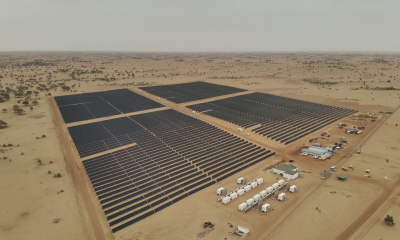
Norwegian renewable energy developer, Scatec, has reached an agreement with the Government of Lesotho to build the first utility-scale solar plant in the Southern African country. The facility will have a power generation capacity of 20 MW, and will supply power to the Lesotho Electricity Company under a 25-year power purchase agreement (PPA).
The solar energy project will be funded by the Renewable Energy Performance Platform (REPP) and equity co-sponsors; Scatec, Norfund, One Power Lesotho, Izuba Energy and the Lesotho Pension Fund.
The Implementation Agreement and the Power Purchase Agreement (PPA) were signed at an official ceremony in Lesotho’s capital, Maseru, last week. The ceremony was attended by the Prime Minister of Lesotho Dr. Moeketsi Majoro, the U.S Ambassador to Lesotho, Rebecca Gonzales, Lesotho’s energy minister, Mohapi Mohapinyane among others.
Commenting on the conclusion of the agreement, Jan Fourie, the General Manager for Sub-Saharan Africa at Scatec, said, “We are proud to be the first IPP to develop a solar project in Lesotho, an important step for Scatec in the country.”
“The Southern African region is a key market for Scatec, and a region with great potential for the development of affordable clean energy. Scatec is the leading solar IPP in the region, and we look forward to expanding our footprint and developing more renewable energy in the years to come,” says General Manager for Sub-Sahara Africa, Jan Fourie.
Solar plant to help Lesotho achieve its electrification goals
The developers expect to achieve financial close for the solar project early next year and commence construction. Once completed, the solar energy facility is expected to dramatically improve Lesotho’s electrification rate and help increase energy security, and energy independence.
The landlocked African country only bordered by South Africa has a national electrification rate of 47%. The government of Lesotho has set a goal of increasing the electrification rate to 75 percent of households by 2022.
Lesotho has identified hydropower, wind energy, and solar power as potential renewable energy sources to help it reach its electrification targets. The South African country currently generates 72 megawatts of hydropower through the ‘Muela Hydropower plant, which does not satisfy domestic demand. Much of its power demand is met through imports from Mozambique and South Africa.