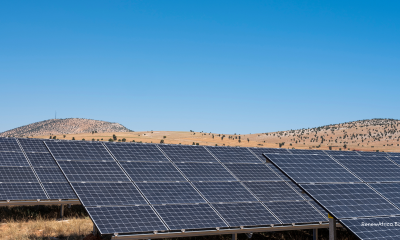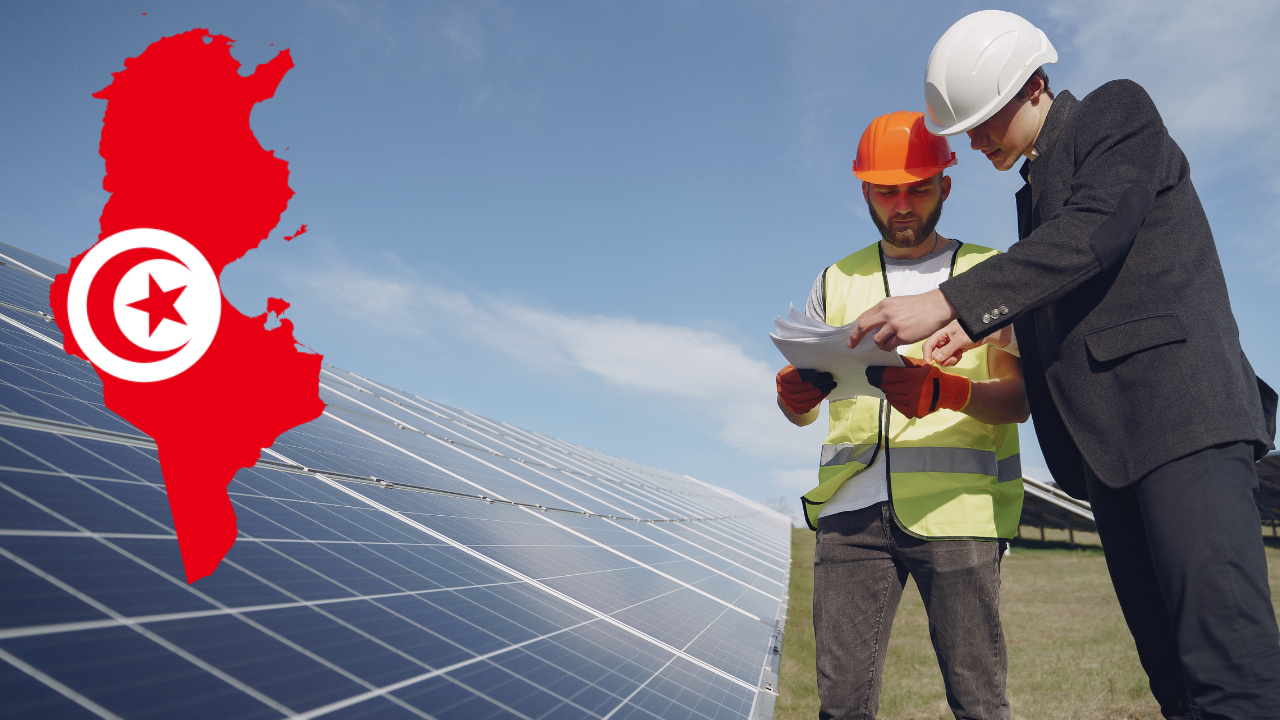

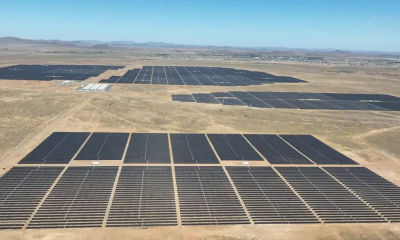


Tunisia has announced plans to have 30% of its electricity needs come from renewable energy sources by 2030. The North African country seeks to invest nearly 1 billion dinars/year to secure energy independence, said Director General of Electricity and Energy Transition at the Ministry of Industry, Energy and Mines Belhassan Chiboub.
Renewable energies are an engine for economic and social development which will generate jobs and cut the cost of power production, the official added at a roundtable meeting held on Tuesday in Tunis on the funding and implementation of a solar project.
The renewables development programme put in motion in 2015, is designed to reach a capacity of 4 gigawatts by 2030, that is 500 megawatts annually, he further said.
Quentin Peignaux, in charge of the Environment, Energy and Climate Programme at the European Union, said the European bloc is committed to underpinning Tunisia’s energy transition.
EU to import clean energy from Tunisia
The EU would need to import a significant amount of clean energy to attain its carbon neutrality target by 2050. “To this end, the EU needs a market in the immediate proximity, one which is dynamic and can produce beyond its own needs,” added Quentin Peignaux.
A planned connection linking the electricity markets of Tunisia and Italy could be a key step in helping the EU meet its carbon neutrality ambitions. North African countries have plenty of land and sunshine to help plug the clean energy gap in land-scarce EU countries with very low solar irradiation.
The World Bank launched the US$13.4 million Tunisia-Italy Power Interconnector project, an initiative to lay the groundwork for the development of an interconnector that will enable energy trade between Tunisia and Europe. The Elmed Interconnector is a proposed 600 MW undersea high-voltage direct current (HVDC) interconnector that will link Tunisia’s power grid to the much larger European network.
Large-scale private sector investments in renewable energy generation in Tunisia are expected as a result of the planned interconnector, but the relative weakness of the national power utility could hinder these investments as the utility is the single electricity buyer.
Increasing regional integration of electricity networks will ensure adequate and optimized electricity supplies in the long-term. In the near term, the interconnector will increase energy security and allow the integration of renewable energy, thus reducing the cost of electricity supply for Tunisians.